

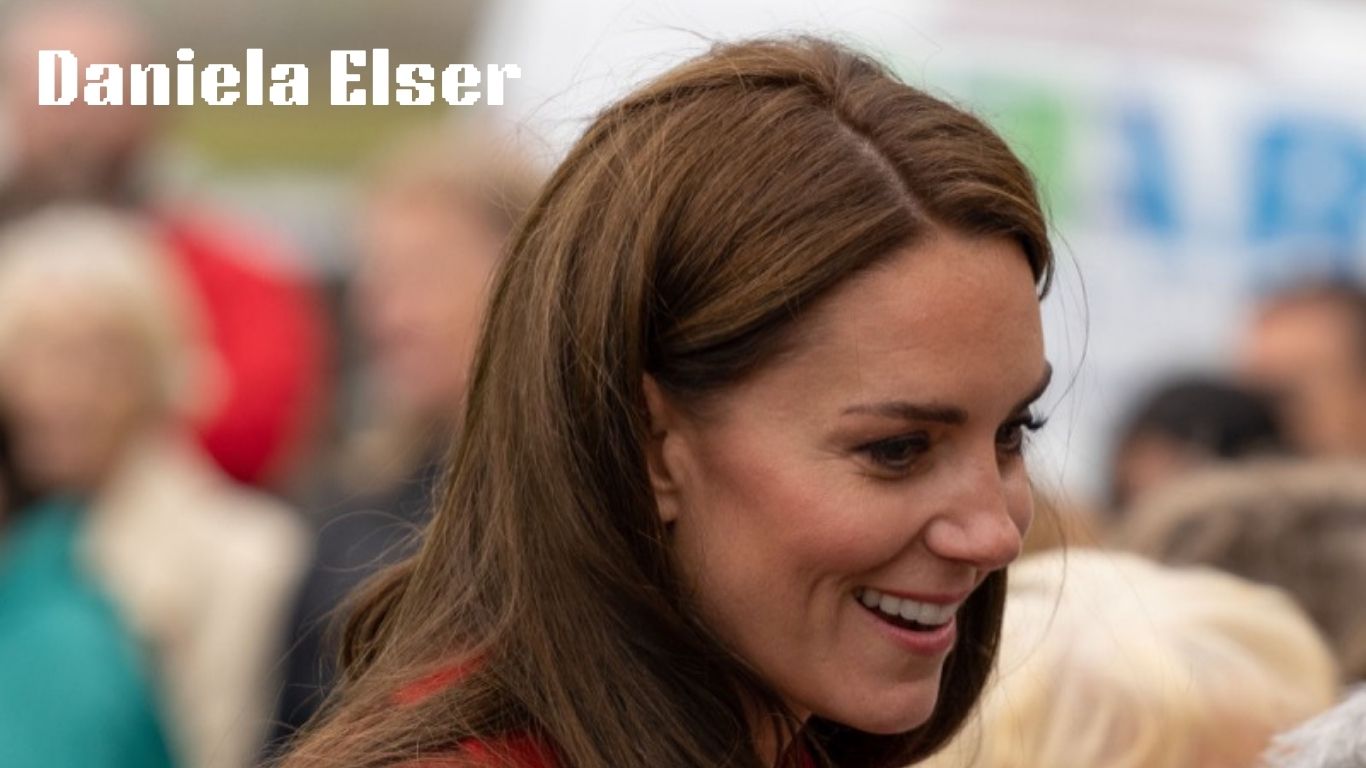
I was drawn to Daniela Elser’s writing right once because it exemplifies a trait that is increasingly rare in contemporary journalism: genuine sincerity wrapped in fearless clarity. Her columns do not hesitantly address the British royal family. Instead, they challenge, critique, and eventually change how millions of people receive their royal news. What began as a casual interest in celebrity journalism has developed into a deep respect for the way one Australian journalist has influenced public opinion globally and transformed royal criticism. This is the story of Daniela Elser, whose name has become synonymous with unabashed honesty and bold reporting.
Who is Daniela Elser? Identifying the Female Source of the News
Instead of adopting surface-level narratives, Daniela Elser is an example of a new type of journalist that digs deeper into the dynamics of power, the media, and public perception. Her career began at news.com.au, where millions of readers interested in subjects other than the typical celebrity gossip cycle read her columns. She is mostly located in Australia. She differs from other royal commentators in that she is not afraid to ask challenging questions and pursue them wherever they go, even if her conclusions don’t align with the prevailing opinion.
Her background in journalism education is solid. She developed her foundational abilities in historical analysis and narrative at the University of Sydney, where she graduated with honors with a Bachelor of Arts. Because this academic education gave her the knowledge and abilities to understand narratives as parts of larger historical and cultural patterns rather than as isolated events, it tremendously aided her subsequent work. After earning her undergraduate degree, she pursued formal journalistic training, contributing both technical know-how and rigorous thinking to the media sector.
The Journey: From Entertainment Editor to Royal Commentary Icon
Elser’s career trajectory reads like a master class in professional growth and strategic positioning. She began her journalistic career in 2010 as an entertainment editor at news.com.au. This job was important because it exposed her to the realities of digital publishing, such as tight deadlines, producing a lot of material, and learning how to attract readers in a media landscape that is becoming more and more fragmented. Despite the fact that many journalists view entertainment beats as trivial or trivial, Elser saw something more profound: well-done entertainment journalism can be used as a lens to examine society, power dynamics, and the public’s obsession with narrative.
In 2011, she made the deliberate decision to go to Marie Claire Australia, where she worked as a features editor for two years before rising to the position of features director. This was not a sidestep; rather, it was a conscious move toward more in-depth research and longer-form narrative. During her five years in this role, she honed her ability to write compelling stories that combined personal significance with broader societal significance. Because it taught her how to write about challenging topics in a way that readers could relate to and comprehend, this experience was invaluable.
By 2018, Elser has changed his career significantly. She transitioned to independent analysis, focusing primarily on royal affairs, particularly those concerning the British monarchy. This was not a haphazard choice. She saw that the royal family represented a unique intersection of privacy and unwanted exposure, tradition and modernity, privilege and public scrutiny. Someone with her analytical abilities had an opportunity to provide genuinely novel views when Prince Harry and Meghan Markle emerged as revolutionary forces in the monarchy.
The Signature Style: Daniela Elser’s Voice’s Unique Character
Elser’s distinct voice, which is confident, incisive, and liberally peppered with wit, instantly attracts readers to his writing. She refrains from employing the corny terminology typical of royal journalism. Instead, she skillfully cuts through media myths in her writing. Her writing style, which blends comedy with meticulous fact-checking, gives cultural relevance to even the most formal royal circumstances. When she examines a royal engagement or public address, she looks at the psychology of public perception, the operation of modern media, and the human drama beneath the grandeur.
The way she speaks is unabashed. She dispels many misconceptions that individuals take for granted. For instance, when discussing Prince Harry and Meghan Markle’s exit from royal life, most people either commended their boldness or criticized their choices. Elser adopted a more nuanced strategy, examining the contradictions in their stated goals. Although the couple stated that their desire for privacy was the reason for their departure, they went on to land multimillion-dollar media deals, write in-depth memoirs, and make several high-profile appearances in interviews. Elser asked the more challenging question, rather than choosing a team: what is the pair actually seeking?
This analysis approach goes beyond looking at famous people. It demonstrates a greater commitment to media literacy and critical thinking. In addition to writing about what happened, she also inquires as to why it occurred, what narratives are being told about it, and who stands to benefit from it. This level of analysis may resonate greatly with readers who are intellectually curious but usually only encounter superficial media coverage.
The Impact: How a Single Journalist Shaped Global Royal Discussion
The influence of Daniela Elser’s work extends far beyond traditional reading figures. She regularly initiates viral conversations on social media platforms, particularly Reddit and X (formerly Twitter), where her posts garner thousands of comments and disagreements. Her impact isn’t solely measured by engagement rates, though; it’s also seen from the way other journalists cite her work, how her ideas appear in subsequent reports, and how readers specifically acknowledge her for changing their perceptions of the royal family.
Her most talked-about work has focused on a few key subjects:
The plot of Prince Harry and Meghan Markle: She has regularly studied how the couple manages their public personas and the discrepancies between their stated objectives and their actual choices.
Her reporting on the reign and transition of King Charles has been on the new ruler’s ability to strike a balance between tradition and modernity.
Princess Catherine’s evolving role: She has studied how the Princess of Wales communicates through public appearances, strategic placement, and visual language.
These subjects are not gossip; rather, they shed light on the relationship between modern monarchy and democratic countries, media development, and changing public views of privilege and institutions.
The Damning Aspect: Why Bold Statements Infuriate People
Not everyone loves Elser because she is willing to challenge accepted wisdom. Her criticism could be too harsh for those who like the monarchy and view it through a conventional and respectful prism. On the other hand, there are occasions when those opposed to the monarchy feel that her critiques are insufficient. This polarization is fascinating because it reveals the deep inequalities in how people understand information about organizations.
What critics describe as excessive sharpness is seen by supporters as essential clarity. In a day of PR-controlled messaging and media sanitization, readers tired of euphemism and spin will find Elser’s refusal to soften her viewpoint refreshing. In addition to not avoiding contentious topics, she frequently talks about what she perceives to be media bias or the public defense of problematic behavior. She has undoubtedly become one of Australia’s most significant contemporary journalists as a result of this approach, which has generated both fervent followers and vocal detractors.
Her occasional criticism draws attention to a crucial feature of the modern media landscape: straightforward truth-telling is now controversial in and of itself. In an environment when so many media outlets and commentators seem dedicated to avoiding offending anyone, Elser’s commitment to clear analysis stands out as truly rebellious, even when the content isn’t confrontational.
Beyond the News: A More Detailed Examination of Royal Analysis
What sets Elser’s work apart from traditional royal journalism is her aim to investigate underlying psychological, sociological, and political elements. In addition to covering the royal family, she is examining:
- Who has the power to affect press narratives and how do they emerge? Media dynamics and narrative formation.
- How do institutions that date back centuries maintain their significance in contemporary democracies? Institutional adaptation is the term for this.
Trauma and personal psychology: What shapes people’s decisions, and how do those decisions impact families and institutions?
In what ways may systems founded on centuries of patriarchal tradition exhibit gender dynamics?
Her diverse approach distinguishes her from analysts who solely talk about which royals wore what or which attended particular occasions. She is curious about the structure that supports these public gatherings, including the emotional underpinnings, strategic calculations, and decision-making processes.
The Platform and Distribution: Upholding Tradition in the Digital Era
Unlike many modern pundits, Elser has chosen to work inside established media structures rather than building a personal brand on several social media channels. Her work primarily appears on news.com.au, though it is syndicated to websites such as Yahoo News Australia and The New Zealand Herald. This decision to remain in traditional journalism rather than pursue influence is significant in and of itself.
This choice enhances her reputation as a professional journalist rather than presenting her as a media celebrity or entertainer. Instead of building a personal brand empire, she is positioning herself as a professional journalist whose work is significant enough that venues want to print it. This distinction is more important than it might appear because it affects how her work is perceived, promoted, and preserved in the media.
Personal Knowledge: The Advantages of Education in Sydney
My own analysis of Elser’s work has demonstrated how her perspective from Sydney provides something that foreign media outlets often do not: a thorough comprehension of English-language media literacy in addition to a geographical and cultural distance from British establishments. A significant number of British reviewers offer either home perspectives or outside, tourist-level observations. Australian journalists often find themselves in a particularly advantageous middle ground while covering British themes. They stay far enough away to identify blind spots that UK critics would miss, yet they know enough about Commonwealth society to discuss nuances.
This perspective is especially helpful when looking at how the royal family is seen globally. Australian journalists invariably acknowledge that these institutions exist in a world devoid of institutional power when they write about the British monarchy. This reinterpretation provides readers with analytical frameworks that they would not otherwise find in more traditional coverage by understanding the monarchy as a cultural phenomena rather than an inviolable institution.
Royal Commentary’s Future: Elser’s Changing Influence
Elser will likely continue to have an increasing influence on royal journalism in the future. She has demonstrated that there is a market for criticism that questions accepted wisdom without raising any objections. As media continues to evolve and consumers increasingly start to question institutional authority, her kind of engaged, analytical journalism appears to be positioned to grow more relevant rather than less.
She seems to be considering more ambitious pursuits, like publishing a podcast or authoring books. Regardless of their form, these will likely reveal her basic inclination for in-depth research over sensationalism. Her influence extends beyond the readers of her work; she has established a model for contemporary journalists on how to mix academic integrity with accessibility, entertainment value with moral obligation.
Daniela Elser’s Significance in the Present Media Landscape
In a world full of hot takes, viral moments, and algorithmic encouragement toward indignation, Daniela Elser is a journalist who is becoming more and more valued because she does the difficult task of analysis rather than only reacting to headlines. She examines the causes of occurrences, what they reveal about broader cultural patterns, and how they impact public discourse and institutional growth.
She is important because she refuses to accept simple answers to challenging issues. She is important because she understands that institutions like the royal family are both places with deep cultural meaning and deeply personal human histories. She is important because she demonstrates that professional, reflective journalism can still pique genuine attention and influence public opinion.
Whether you agree with Daniela Elser’s conclusions or actively disagree with her framing, she has become an indispensable figure in the present media conversation around the British monarchy and, more broadly, how institutions navigate legitimacy and relevance in democratic countries. Her essay exemplifies what journalism can accomplish when it combines critical insight with genuine boldness.
To sum up
Daniela Elser rose from being an entertainment editor to becoming Australia’s most well-known royal analyst by questioning conventional wisdom without conducting a rigorous examination. Her rise was not a coincidence; rather, it was a response to the public’s genuine need for journalism that prioritizes the truth over taste.
Elser is exceptional in finding a balance between enjoyment and academic rigor. Although some look for viral moments, she studies the basic mechanics of institutional power, public perception, and media narratives. In an era of algorithmic echo chambers and sanitized news, her unreserved criticism feels novel because it asks, “Why?”
Her fundamental insight that institutions in democracies must acquire legitimacy through analysis rather than through inherited traditions will resonate with millions of people. In contrast to divine creatures who are immune to criticism, her thesis holds that the royal family is composed of flawed individuals navigating archaic systems. This perspective has liberated readers who felt the coverage lacked authenticity but lacked the words to articulate it.
Beyond just its immediate readership, Elser has a significant impact. Her analytical frameworks have influenced ongoing discussions about media, power, and institutional responsibility. She has made it clear that audiences expect intelligent commentary that respects their ability to think critically and acknowledges the complexity of the situation without becoming overly confident.
Ultimately, Daniela Elser is important because she embodies journalism in its purest form: boldly seeking the truth, rigorously being approachable, and critically analyzing with wit. She acts as a reminder that scrutinizing institutions does not diminish them; on the contrary, it fosters more participation in democracy. Her work illustrates the possibility of experiencing intense emotions while thoroughly analyzing something. The message, delivered by her distinct voice on millions of screens, is perhaps the most important contribution of contemporary journalism to informed citizenship.





 in London.