

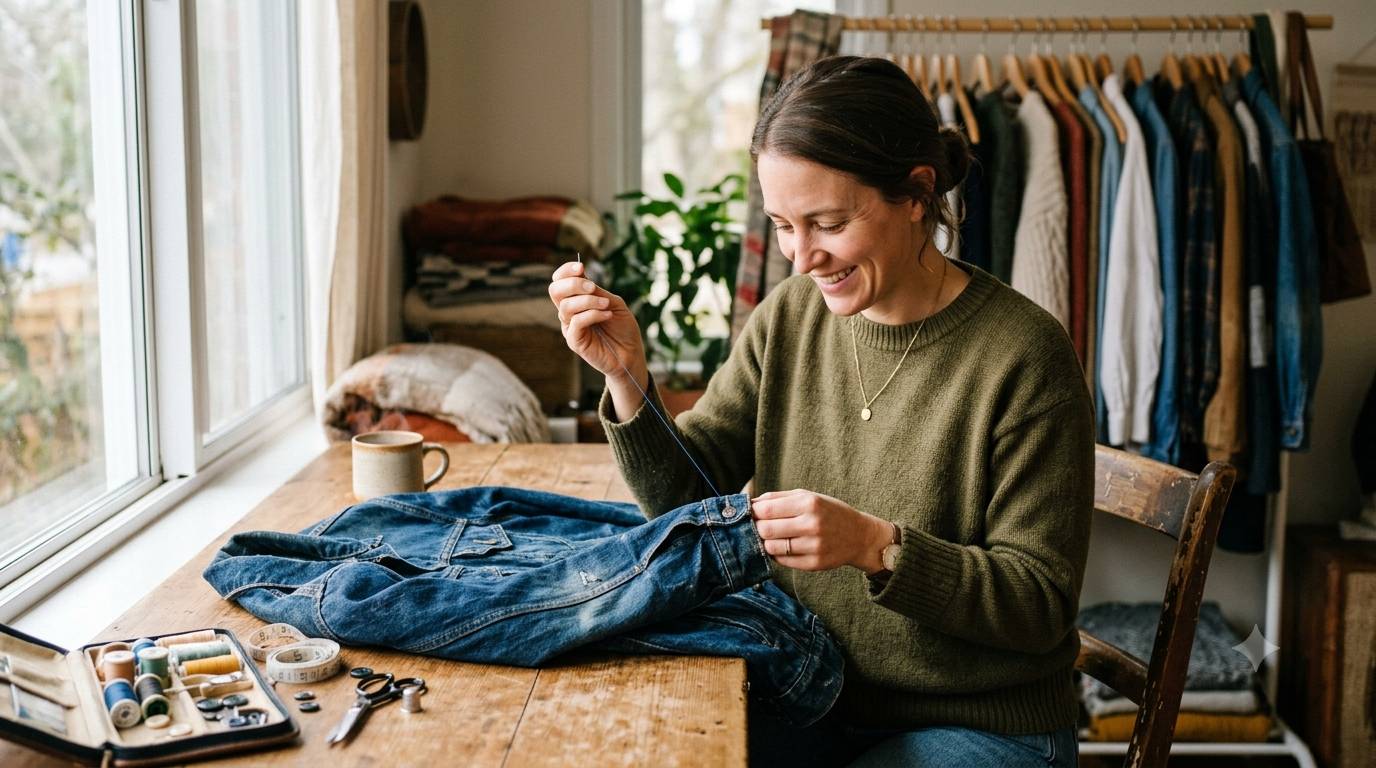
Roughly 30 per cent of the clothing in the average UK wardrobe has not been worn in the past year, and research by WRAP found the most common reason is not boredom or wear and tear. It is that the item no longer fits. That single finding reframes a lot of what we assume about overflowing wardrobes. A large share of what we own has been quietly written off for a reason that is often fixable in an afternoon.
Retail data tells the same story from the other end. A 2025 study by the fulfilment provider fulfilmentcrowd found that around 30 per cent of fashion items bought online in the UK are sent back, with poor fit the reason cited most often. Clothing now carries the highest return rate of any major online category in Britain. Shoppers hedge by bracketing, ordering the same dress in two or three sizes and returning the rest, which turns one sale into several parcels going back up the motorway.
The alternative is unglamorous and quietly effective: buy the size that fits your largest measurement, then have the rest adjusted. Whether you use a local seamstress or one of the bespoke tailors Essex and the surrounding counties are home to, the work is usually faster and cheaper than people assume. A hem or a take-in at the side seams often costs somewhere between £15 and £40 and takes a few days. Restructuring a lined jacket or a beaded gown costs more, but it is still a fraction of replacing the garment, and the result is something cut to your body rather than to a size chart.
What can be altered, and what cannot
The trade rule of thumb is simple. Taking a garment in is straightforward, letting it out depends entirely on how much seam allowance the manufacturer left, and anything involving the shoulders is difficult and expensive. The shoulder seam sits at the structural heart of a jacket or a fitted dress, and moving it means dismantling much of the garment. Waists, hems, sleeve length, sleeve width and side seams, by contrast, are routine work.
Fabric matters as much as construction. Bias-cut silk, heavily beaded lace, pleated skirts, leather and anything with a bold print or check that has to be matched across a seam all take longer and cost more. If you are buying with alterations in mind, it is worth asking the question before you pay rather than after.
When made to measure earns its place
Standard sizing is built on a set of average proportions, so the further your body sits from that average, the less well the high street will serve you. A significant difference between bust and waist, a long or short torso, broad shoulders or a height outside the 5ft 4in to 5ft 7in band that most garments are graded around will all show up as a poor fit off the peg. This is why occasion wear, bridalwear and corsetry so often end up in a studio. Structured garments have to be built to a specific body to do their job at all.
Bridal is the clearest example. Most gowns are ordered in a stock size and then fitted, so alterations are not an unexpected extra but a standard part of the process. Allow eight to twelve weeks and expect two or three fittings. Bring the exact shoes and underwear you intend to wear, because a change of heel height alters the hem all the way round.
The sustainability argument
There is an environmental case too, and it is a well evidenced one. WRAP estimates that keeping a garment in active use for an extra nine months reduces its carbon, water and waste footprints by 20 to 30 per cent each. Set against roughly 350,000 tonnes of used clothing going to landfill in the UK every year, a £25 alteration that brings a jacket back into rotation does more measurable good than most sustainable shopping decisions. The same logic applies to reworking inherited or vintage pieces, whether that means recutting a mother’s wedding dress into something wearable or turning a gown into a christening outfit.
None of this requires a wholesale change in how anyone shops. It requires one habit: before returning something or pushing it to the back of the rail, ask whether it could be made to fit. The answer is yes more often than most people expect, and a garment that fits properly is worn, which is the whole point of owning it.





 in London.