

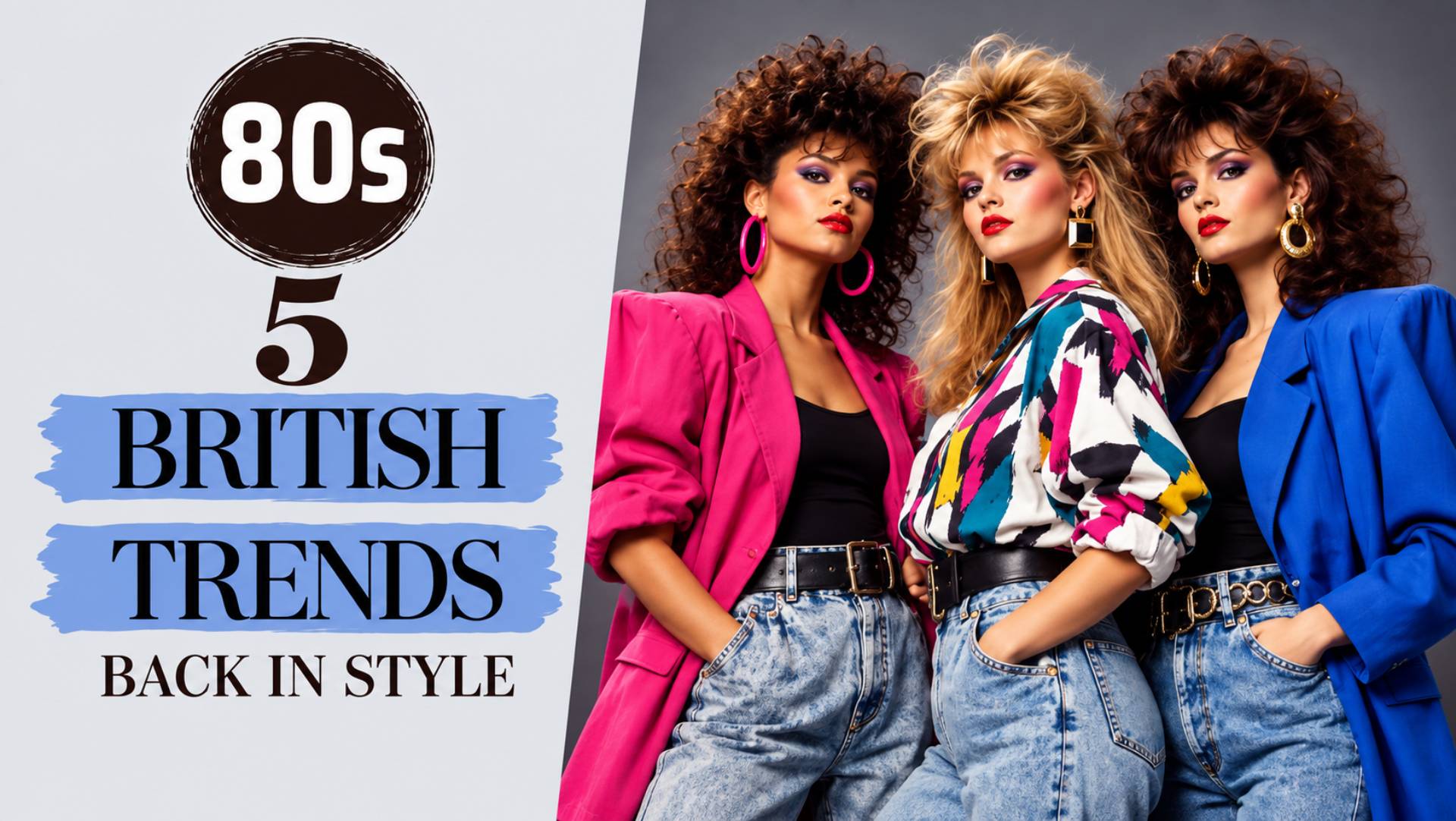
British fashion in the 1980s was not designed to disappear quietly into the background. Shoulders became wider, colours became brighter and evening clothes reflected every available light. Denim moved beyond workwear, while New Romantic style turned getting dressed into an act of imagination.
Four decades later, many of those ideas are back.
The modern revival is not an exact copy of 80s British Fashion Trends. Today’s power blazer is often worn with loose jeans rather than a matching office skirt. Today’s power blazer is often worn with loose jeans rather than a matching office skirt. Double denim is mixed across different washes. Polka dots appear on simple dresses and shirts, while metallic fabrics are balanced with everyday basics. Ruffled blouses no longer belong only to a theatrical nightclub look.
Current fashion coverage has identified strong shoulders, defined waists, polka dots, metallics and romantic detailing among the styles returning to collections and wardrobes. Their renewed appeal reflects a wider move away from cautious minimalism and towards clothes with more personality.
Here are five British 1980s fashion trends that feel cool again, along with practical ways to wear them without looking as though you are attending a costume party.
Table of Contents
1. Power Suits and Strong Shoulders
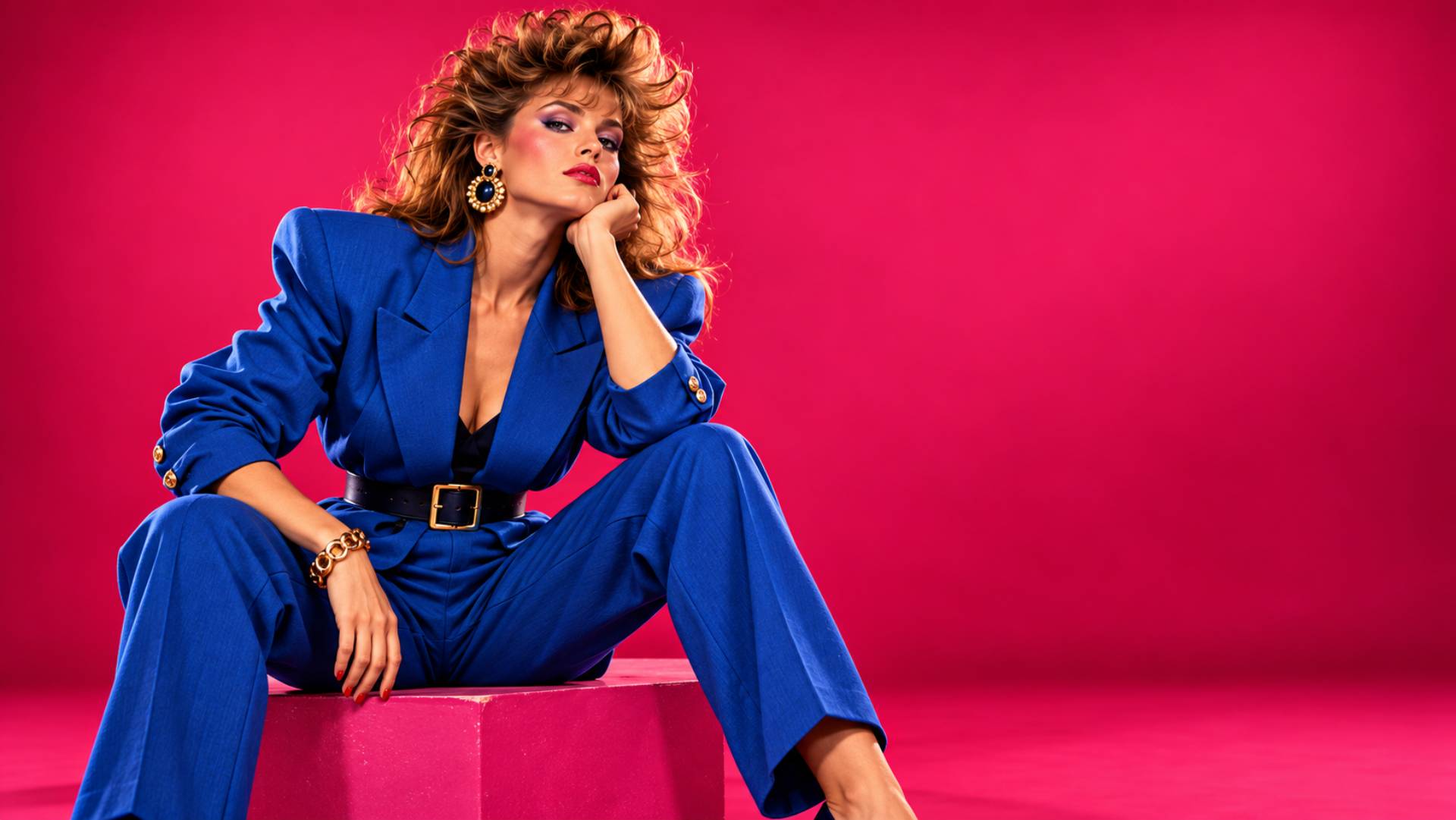
Nothing captures the confidence of 1980s fashion more quickly than a strong shoulder line. Power dressing used structured jackets, matching separates and defined waists to create an authoritative silhouette.
In Britain, the look appeared in offices, department-store fashion, television dramas, magazines and public life, becoming part of Iconic British 80s Style. It became closely associated with ambition and the changing visibility of women in professional settings. Men’s tailoring also used wider cuts and stronger proportions than the slim silhouettes that dominated many later years.
The original version could be highly coordinated: jacket, skirt or trousers, blouse, court shoes and noticeable accessories. Shoulder pads did not merely shape the garment; they announced the wearer’s arrival.
Why it has returned
Fashion is moving back towards visible structure. Recent trend reporting has highlighted fitted waists, pronounced shoulders and expressive tailoring inspired partly by the 1980s. After years of very relaxed jackets, a sharper silhouette feels fresh again.
The modern power suit is also more flexible. It can be oversized or neatly fitted, formal or casual, matching or deliberately broken apart. Its appeal lies in the sense of confidence it creates rather than in following an office uniform.
How to wear it now
- Pair a structured blazer with straight-leg jeans and a plain T-shirt.
- Choose a jacket with one clear architectural feature, such as strong shoulders or a nipped waist.
- Wear a matching trouser suit with flat shoes or clean trainers for a relaxed contrast.
- Add a slim belt when you want to define the waist.
- Keep jewellery simple if the jacket already has bold buttons or a dramatic cut.
What to Avoid
Do not combine huge shoulder pads, bright lapels, a wide belt, bold earrings and a strongly patterned blouse unless you intentionally want a theatrical result. One or two confident elements are enough. The best current version borrows the authority of the 1980s while leaving behind the rigid expectation that power dressing must look formal.
2. Double Denim
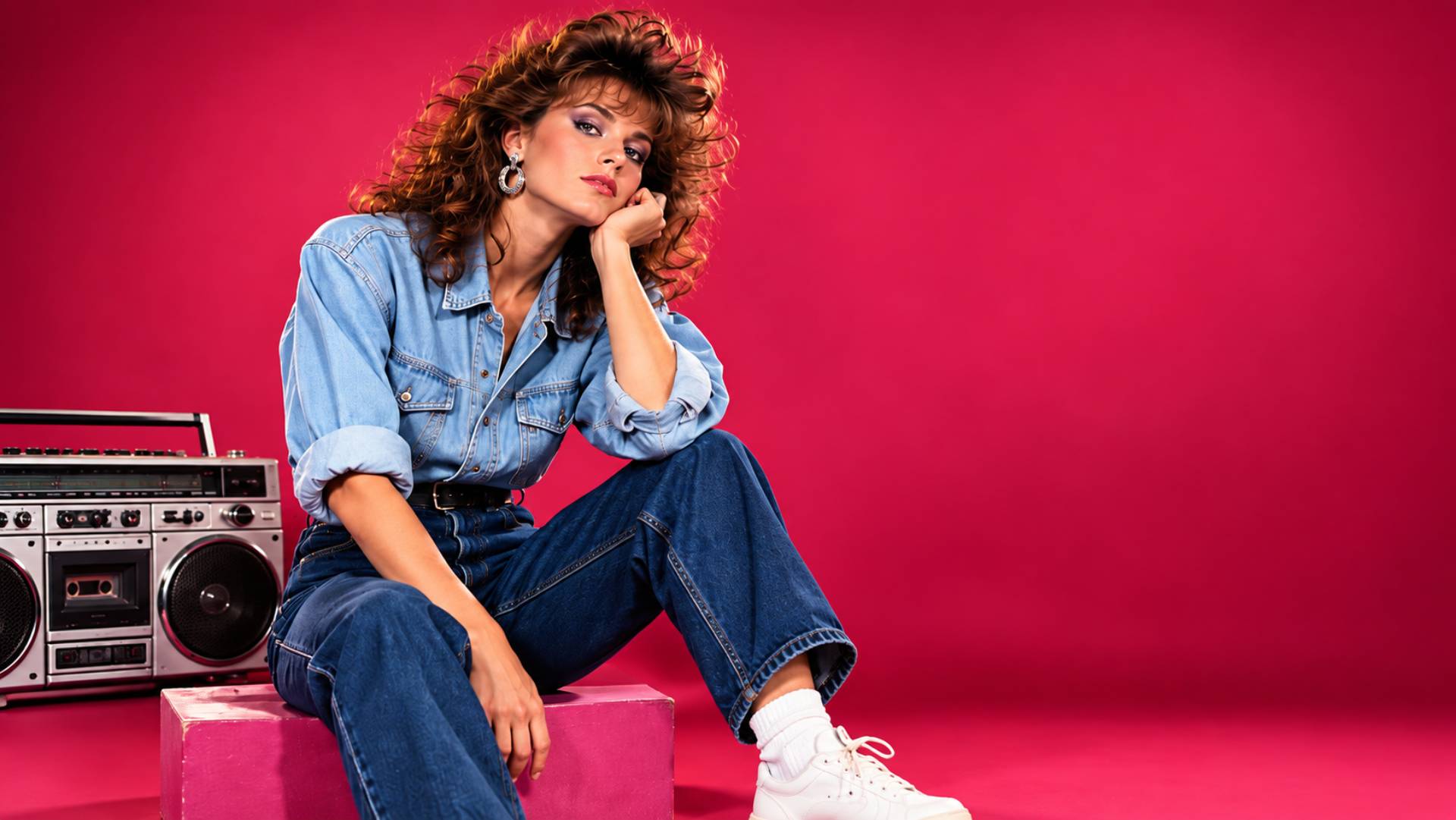
Wearing a denim jacket with jeans has travelled through cycles of popularity, embarrassment and rediscovery. In the 1980s, denim was everywhere: jackets, jeans, skirts, shirts, waistcoats and heavily washed finishes all formed part of casual British style.
Music and youth culture helped make it expressive, turning denim into one of the most recognisable elements of Retro British Fashion. A denim jacket could be clean and mainstream, customised with patches, worn over band clothing or paired with boots and a leather belt. Acid and stone washing gave the fabric a deliberately worn, high-contrast appearance.
Double denim later became an easy target for fashion jokes, particularly when both pieces matched too perfectly. Its return shows how styling can change the reputation of a familiar idea.
Why it has returned
Modern wardrobes value clothes that are durable, versatile and easy to layer. Denim satisfies all three. Vintage shopping has also made older jackets and jeans desirable, especially when their wear and fading cannot be reproduced perfectly by new garments.
Today’s double denim is less dependent on a complete matching set. Different shades, weights and proportions create separation between the top and bottom halves.
How to wear it now
- Combine a pale, relaxed denim shirt with dark indigo jeans.
- Wear a cropped jacket with high-waisted wide-leg denim.
- Break up similar washes with a contrasting belt, knit or white T-shirt.
- Pair an oversized denim jacket with a simple denim skirt.
- Use black, ecru or grey denim if traditional blue feels too obvious.
What to Avoid
Be cautious with identical washes, tight fits and multiple denim accessories in one outfit. A denim jacket, jeans, shirt, bag and boots can turn a practical idea into a theme. Double denim works now because it no longer has to prove that it is fashionable. It is familiar, useful and easy to personalise.
3. Polka Dots and Bold Graphic Prints
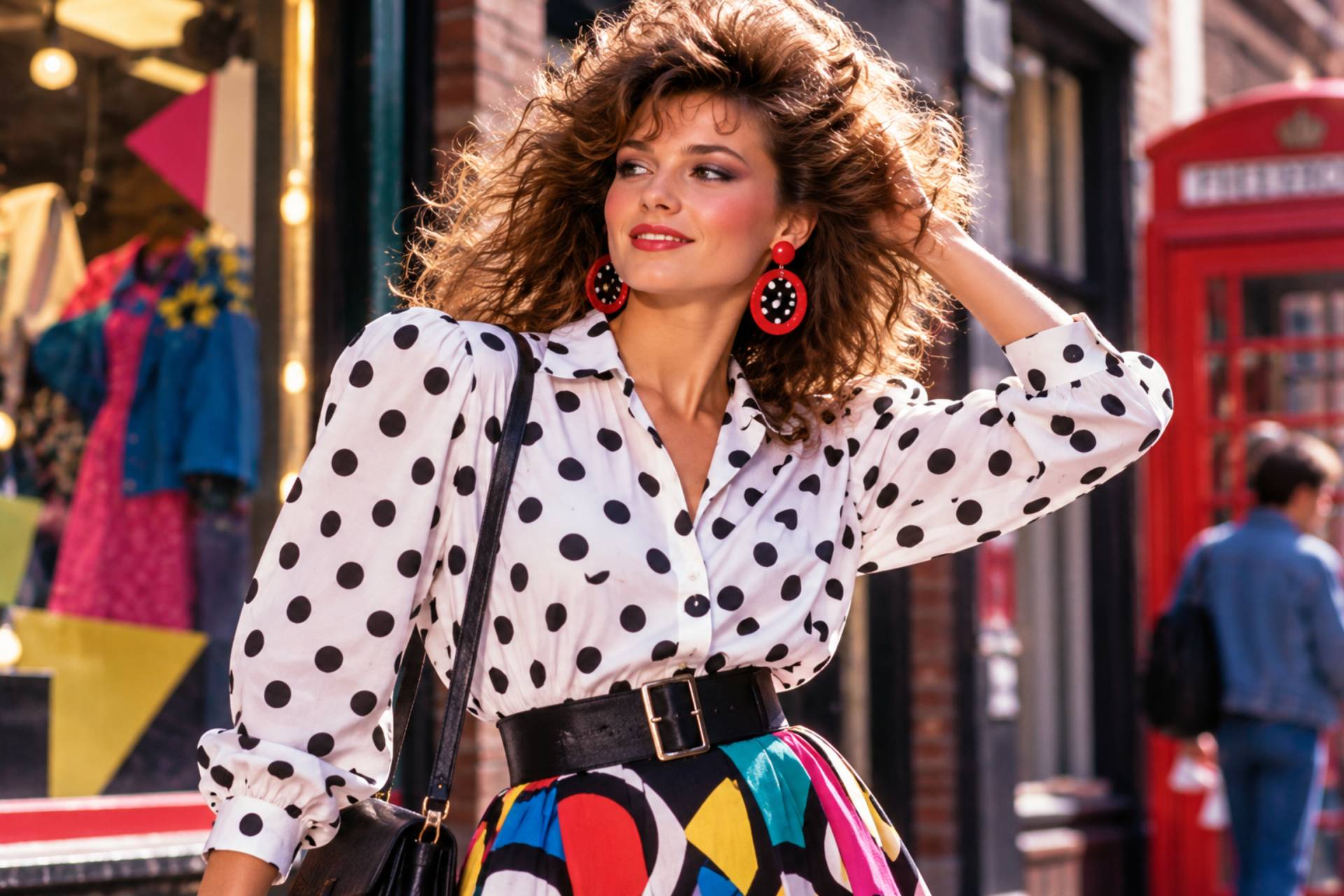
The 1980s embraced prints with enough clarity to be seen from across a room. Polka dots, checks, stripes, abstract shapes and animal patterns appeared on dresses, blouses, skirts and accessories.
Polka dots were particularly adaptable. They could look playful, elegant, graphic or romantic depending on their scale and colour. British wardrobes included everything from restrained monochrome spot prints to brighter dresses with exaggerated sleeves and fitted waists.
The pattern has returned repeatedly because it sits between a neutral and a statement, making it an easy part of the wider 1980s Style Revival. Black-and-white spots are easy to wear, yet they still give an outfit more movement than a plain fabric.
Why it has returned
Recent fashion forecasts and coverage have placed spots and checks among the significant print directions, while retrospective fashion features continue to connect current polka-dot styling with memorable 1980s looks.
Prints also offer an accessible way to move beyond neutral dressing. Someone who would never choose metallic trousers or a heavily padded blazer can still wear a spotted shirt.
How to wear it now
- Choose a black-and-white polka-dot blouse with plain tailored trousers.
- Wear a spotted midi dress with simple boots or flats.
- Pair a small-scale print with one solid colour taken from the pattern.
- Use a scarf, bag or hair accessory as a low-commitment introduction.
- Mix spots with stripes only when the colours are closely controlled.
What to Avoid
Avoid combining several high-contrast prints with oversized jewellery and very dramatic hair unless maximalism is the deliberate aim. A strong pattern needs visual space around it. The modern polka-dot revival proves that an old print does not need to be reinvented completely. Changing the cut, scale and styling is enough to make it feel current.
4. Metallics, Sequins and After-Dark Shine
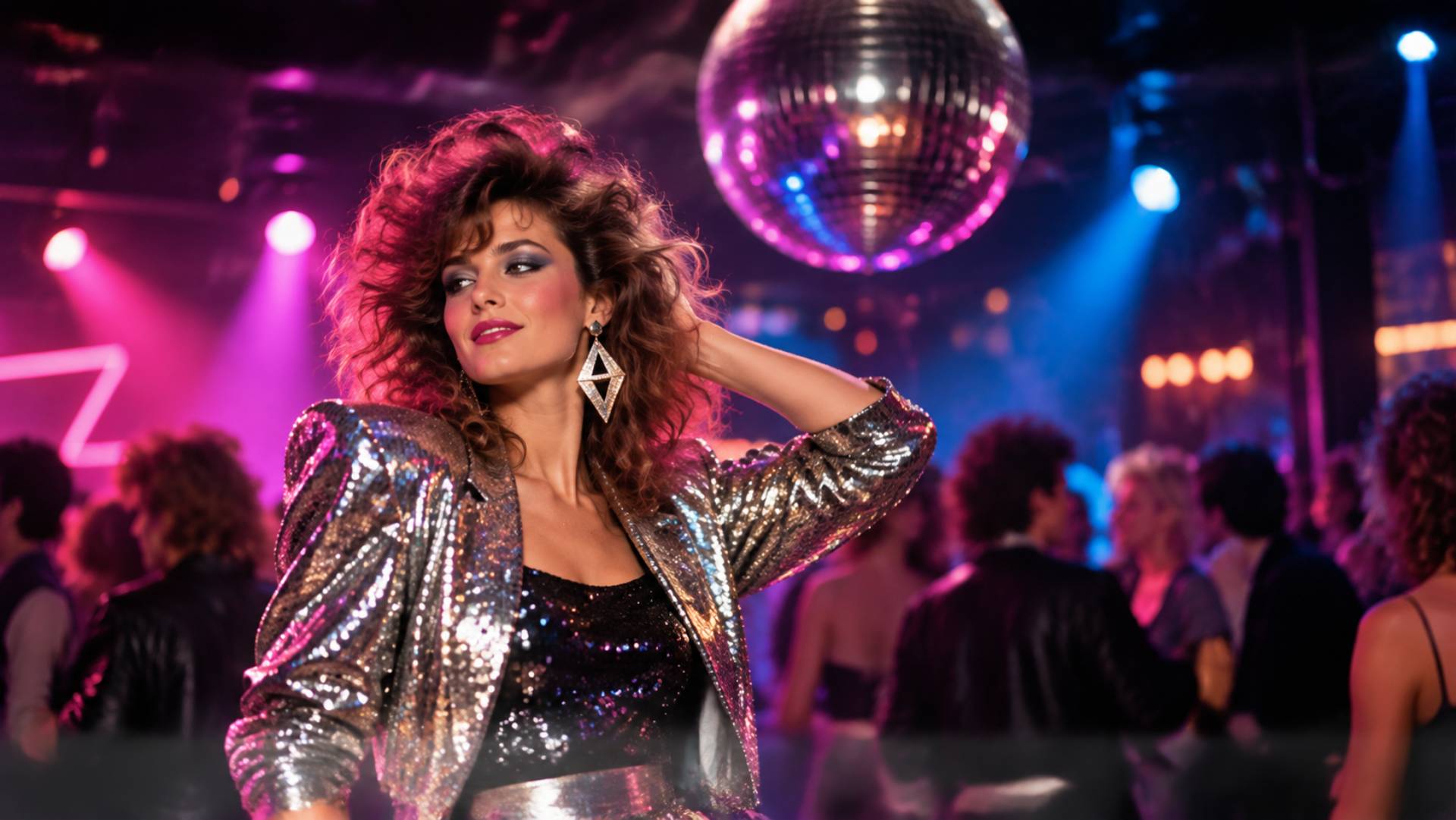
The 1980s understood the value of clothes that reacted to light. Lamé, sequins, metallic thread and glossy fabrics were natural choices for discos, parties, music performances and evening events.
Silver and gold were not the only options. Electric blue, purple, red and jewel-toned shine also appeared across tops, dresses and accessories. The effect could be glamorous, futuristic or deliberately excessive.
British pop culture helped make metallic dressing memorable. Stage clothes and music videos presented fashion as performance, while high-street versions allowed partygoers to borrow some of the same energy.
Why it has returned
Metallic surfaces have reappeared in current collections through sequins, crystals, reflective fabrics and shimmering accessories. Among recent British Fashion Comebacks, metallics stand out because they can now be worn far beyond evening parties and special occasions. After long periods of understated dressing, shine offers an immediate sense of occasion.
The important change is timing. Metallics are no longer restricted to late-night events or Christmas parties. A silver shoe, bag or skirt can appear in an ordinary daytime outfit.
How to wear it now
- Pair a metallic midi skirt with a soft grey jumper.
- Wear silver shoes with dark denim and a plain shirt.
- Choose one sequinned top under a simple black blazer.
- Use a metallic bag to brighten an otherwise neutral outfit.
- Balance a reflective fabric with matte cotton, wool or denim.
What to Avoid
Do not make every surface compete. A metallic dress, glitter tights, sequinned bag and reflective shoes may photograph dramatically, but the outfit can lose its focal point.The current approach treats shine almost like a neutral. One reflective piece can make ordinary clothes feel intentional without requiring a full 1980s party look.
5. New Romantic Ruffles and Statement Blouses
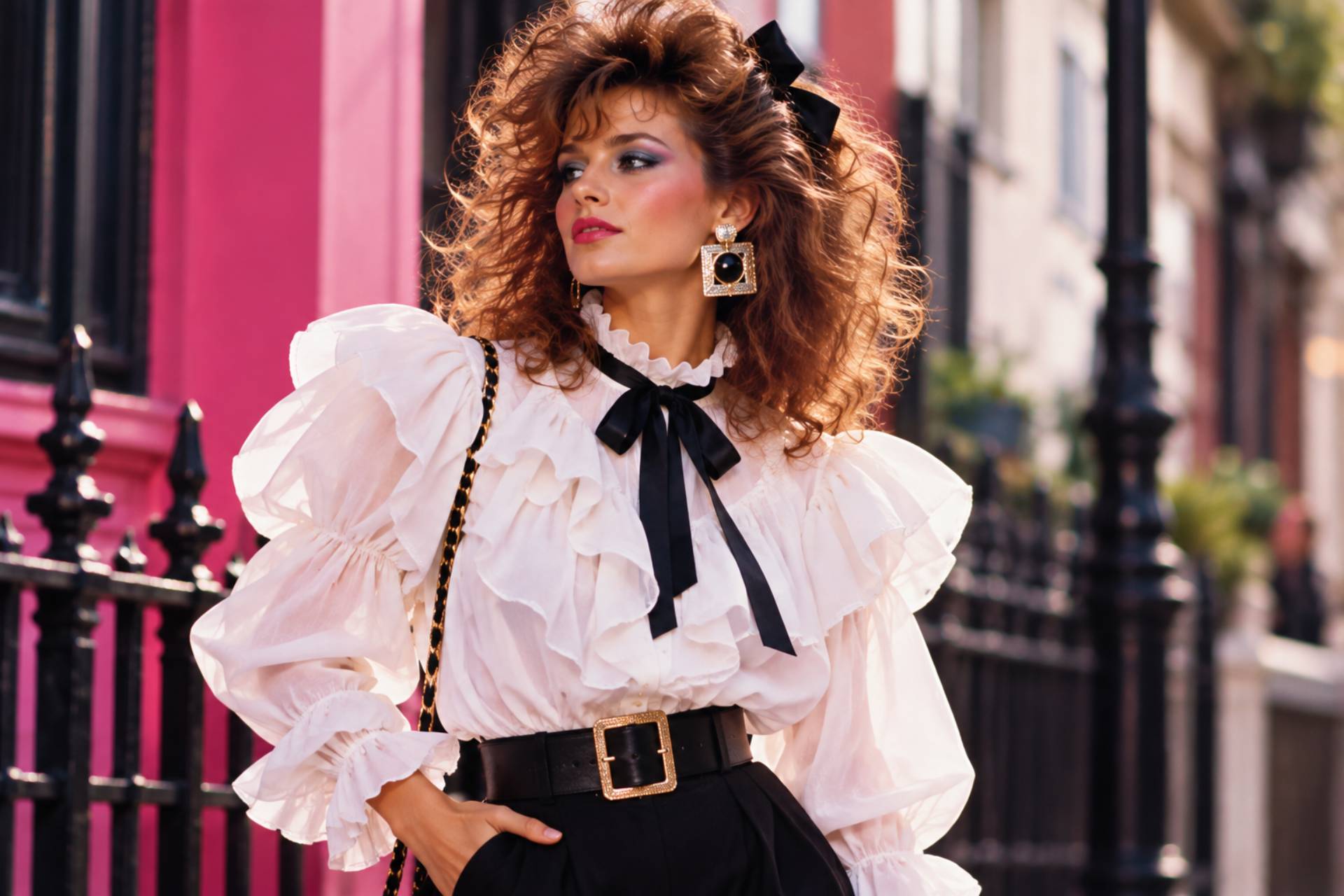
The New Romantic movement gave Classic 80s Fashion one of its most imaginative British identities. Ruffled shirts, flowing sleeves, velvet jackets, military references, make-up and carefully styled hair turned the wearer into a character. Ruffled shirts, flowing sleeves, velvet jackets, military references, make-up and carefully styled hair turned the wearer into a character.
The look drew from history without trying to reproduce one period accurately. Pirate shirts, aristocratic details, theatrical tailoring and futuristic club styling could all appear in the same cultural world. It also challenged conventional boundaries between masculine and feminine dressing.
Today’s revival is usually quieter, but the central idea remains: a blouse or jacket can carry mood, drama and individuality.
Why it has returned
Current collections have revived romantic details such as ruffles, lace, feathers, voluminous blouses and ornate jackets. Fashion coverage has described a broader “New Romanticism”, combining softness, fantasy and storytelling with modern tailoring.
This direction offers a response to clothing that feels too plain or functional. A ruffled collar or full sleeve can change an outfit without sacrificing wearability.
How to wear it now
- Wear a white ruffled blouse with dark straight-leg jeans.
- Place a romantic shirt beneath a simple trouser suit.
- Pair a velvet or military-inspired jacket with a plain top and modern trousers.
- Choose one voluminous sleeve rather than ruffles, lace and bows together.
- Use a brooch or pearl detail to suggest the mood without recreating a full club outfit.
What to Avoid
Do not copy a famous performer’s exact outfit or combine every New Romantic reference at once. The modern version works best as an influence, not an impersonation. This trend feels relevant because it treats style as self-expression. It allows clothes to be romantic, theatrical or gender-fluid without needing to fit a conventional category.
Quick Comparison: Then and Now
| 1980s Approach | Modern Interpretation |
|---|---|
| Fully coordinated power suit | Structured blazer with denim or relaxed trousers |
| Matching denim wash from top to bottom | Mixed washes and contrasting proportions |
| Bold print across the whole outfit | One graphic dress, blouse or accessory |
| Metallic partywear worn after dark | One reflective piece used during day or evening |
| Complete New Romantic character | Ruffled blouse or ornate jacket with modern basics |
The modern versions work because they edit the original ideas. They preserve the attitude while reducing the number of competing elements.
Why Is 1980s Fashion Returning?
Fashion moves in cycles
A style often needs to disappear before it can feel interesting again. Once the negative associations fade, a new generation can approach the shape or fabric without remembering why it went out of fashion.
Younger wearers see possibility rather than embarrassment
Someone who did not wear shoulder pads or acid-wash denim the first time can judge the style on its present appearance. What feels dated to one generation may look distinctive to another.
Minimalism created demand for stronger personality
Neutral colours and simple silhouettes remain useful, but years of understated dressing can make bold structure, pattern and shine feel exciting. The 1980s provides a large archive of confident ideas.
Vintage shopping supports experimentation
Second-hand shops and resale platforms make Vintage British Style and original period-inspired pieces easier to find. A vintage blazer or denim jacket can be combined with modern clothes rather than worn as a complete historical outfit. A vintage blazer or denim jacket can be combined with modern clothes rather than worn as a complete historical outfit.
Social media keeps archive fashion visible
Old music performances, magazine pictures, family albums and street photographs circulate constantly. People no longer need to wait for a designer to revive a decade; they can discover and reinterpret it themselves.
How to Wear 1980s Fashion Without Looking Like Fancy Dress
The simplest rule is to use one major reference at a time.
If the blazer has powerful shoulders, keep the shirt and trousers quiet. If the dress uses a large polka-dot print, choose simple shoes. If the blouse has ruffles and full sleeves, avoid adding several ornate accessories.
Fit also matters. A vintage garment may need minor tailoring to sit properly on a modern outfit. Shoulder seams, sleeve length and trouser rise can determine whether a piece feels intentional or merely old.
Colour can help control the effect. Black, navy, cream, grey and denim give dramatic 1980s pieces a calm foundation. Once the outfit feels balanced, brighter colours can be introduced gradually.
Most importantly, wear the trend because it suits your style. A revival is an invitation, not an instruction to dress like everybody else.
Buying Original 1980s Fashion Responsibly
Vintage clothing can offer better construction and a genuine period shape, but condition needs careful checking.
Inspect:
- Seams and linings
- Fastenings and zips
- Elastic that may have deteriorated
- Missing buttons or beads
- Stains around collars and cuffs
- Fabric damage beneath shoulder pads
- Strong storage smells
- Accurate measurements rather than the size label alone
Sizes and cuts have changed, so compare the garment’s actual measurements with clothing that already fits you.
This is especially useful for 80s Trends Making a Comeback, where modern versions can preserve the silhouette or mood while offering better comfort and durability. The aim is to enjoy the style, not to preserve historical accuracy at the cost of comfort.
The Best 1980s Trends Have Returned With Better Balance
The current revival of British Retro Fashion Trends is not asking people to copy the decade exactly. It is selecting what the 1980s did particularly well: confident structure, practical denim, clear prints, celebratory shine and a willingness to treat clothes as creative expression. It is selecting what the 1980s did particularly well: confident structure, practical denim, clear prints, celebratory shine and a willingness to treat clothes as creative expression.
Power suits have become more relaxed. Double denim is easier to mix. Polka dots feel graphic rather than old-fashioned. Metallics can work in daylight, while New Romantic details bring drama to otherwise simple wardrobes.
That balance is why these trends feel cool again. They are recognisable without being trapped in the past.
The safest way to try them is also the most stylish: choose one idea, wear it with confidence and let the rest of the outfit give it room to work.



 in London.